
Information on your ownership
An explanation on current and possible future ownership models
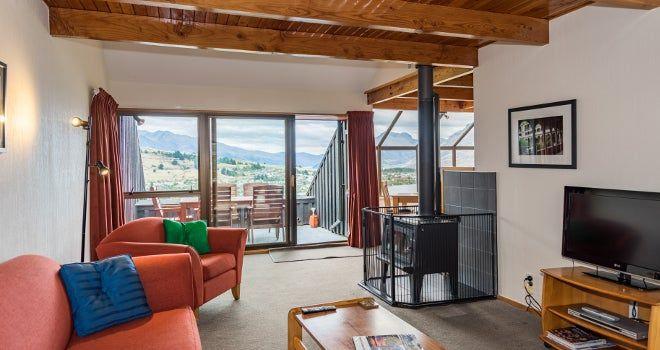

Role of BCC
The Role of the BCC in a Timeshare Resort
In a timeshare resort, all owners share responsibility for the property. The Body Corporate Committee (BCC) is elected by owners to help manage the resort on their behalf and ensure it is well run, well maintained, and financially sustainable.
While all owners vote on major decisions at general meetings, the committee plays a vital governance and oversight role throughout the year.
Role of the Body Corporate Committee.
- Represent All Owners
- Oversee Resort Maintenance
- Determine Budgets, Levies, and oversee Financial Management
- Implement Decisions of Owners
- Set and Enforce Rules
- Work with the Resort / Body Corporate Manager
- Protect the Future of the Resort
- Ensure Good Communication and Transparency
- Act Responsibly and in Good Faith
A capable and transparent committee helps to:
- Maintain high standards and guest satisfaction
- Protect property values and resale potential
- Keep levies fair and well-managed
- Prevent costly repairs through forward planning
- Avoid disputes and promote harmony
- Secure the resort’s long-term future


Unit Titles
Understanding Strata (Unit Title) Property Rights
A practical guide to who owns what — including land and future development units
In New Zealand, strata properties are governed by the Unit Titles Act 2010. This form of ownership is commonly used for apartments, townhouses, retirement villages, and some resorts or timeshare-style developments.
Under a unit title development, ownership is divided into individual units and shared common property, all within a single legal framework known as a Unit Plan.
Every owner automatically becomes a member of the Body Corporate, which collectively manages the shared elements of the property.
Who owns what in a strata development?
Unit Owners — Ownership of Their Individual Unit
Each unit owner holds:
- Legal title to their individual unit
- The airspace and structural elements defined within the unit boundaries on the Unit Plan
- A share of ownership in the common property (as part of the Body Corporate)
The exact boundaries of a unit are determined by the Unit Plan, not by physical features such as walls or fences. These boundaries may be:
- Interior surfaces of walls, floors, and ceilings
- The centreline of walls
- Or exterior boundaries (less common)
This is why reviewing the registered Unit Plan is essential to understand ownership.
The body corporate — Ownership of common property
The Body Corporate owns the common property collectively on behalf of all unit owners.
Common property typically includes:
- The land beneath and around the buildings
- Foundations and structural elements (if outside unit boundaries)
- Driveways and car parks (unless separately titled)
- Gardens and landscaped areas
- Lobbies, lifts, hallways, and shared facilities
- Service infrastructure (pipes, wiring, drainage)
Each owner has a share in this property, based on their ownership interest.
No individual owner owns a specific piece of common property — ownership is shared collectively.
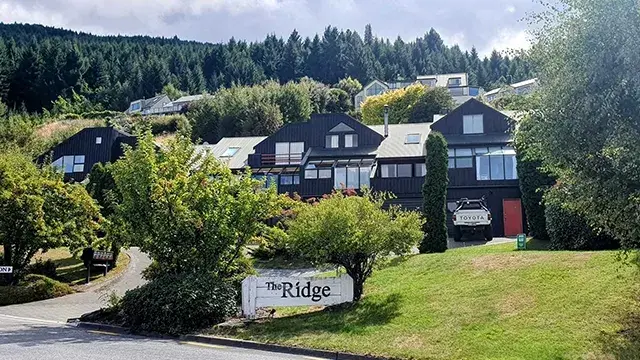
non-timeshare
Non timeshare units--The same but different
Underlying Title
Private Units and Timeshare Units are fundamentally the same in title. Both are Principal Units on the same Unit Plan registered with Land Information New Zealand, and the Unit Plan itself does not distinguish between unit types.
Ownership and Use
The practical difference arises from how certain units are owned and used. Timeshare Units have multiple owners—in this case, fifty-one—who have also entered into leases that allocate each owner the right to use the unit for one week each year.
Key Point
The distinction is therefore not in the underlying title, which is the same for both Private and Timeshare Units, but in the ownership arrangements and the way each unit is occupied for defined periods and managed.
The Unit Titles Act
- The Unit Titles Act 2010 (UTA) governs properties that have been developed into units, including The Ridge Resort Queenstown. Under the UTA, multiple owners may hold individual or shared ownership of a Principal Unit (PU) and, through the body corporate, jointly own the common property, such as driveways, lawns, and gardens.
- The legislation was originally enacted in 1972, substantially updated in 2010, and further amended in the early 2020s. It enables Land Information New Zealand (LINZ) to issue a Record of Title (ROT) for units in multi-unit developments, including apartments and timeshare projects.
- The ROT is freehold, meaning the owner holds a fee-simple title. That title remains part of the owner’s estate until it is transferred. Related terms you may hear include unit titles and stratum titles.
a. Principal Units
● A Principal Unit is a building or part of a building as defined on a Unit Plan (UP). The UP for the Ridge is UP 20743 lodged with LINZ, which defines thirty-two Principal Units (PU) plus areas of Common Property. The UP defines the location and the extent of each Unit in the horizontal plane and in the vertical plane through upper and lower height limits recorded in a table on the face of the plan.
● Separately identifiable Records of Title have been issued for each Principal Unit based on the definition of the PU detailed on the UP.
● The eleven PU numbered 17–27 are the Non-Timeshare Units, commonly referred to at The Ridge as Private Units. (The Act refers to these Private Units as “a Principal Unit that is not a timeshare unit”.) These typically have one or only a few owners – often owned within one family.
● The nineteen PU numbered 1-8, 11- 16 and 28-32, are the Timeshare Units. Each of these have 51 Owners, each of whom are issued their own unique record of title, recording that they each own an undivided 1/51st share of their specific Unit.
● The PU numbered 9 and 10 are named Future Development Units (FDU) on the UP. Records of titles have been issued for this interest, but these units have not been constructed. The owners’ rights and obligations differ and are outlined in the UTA.
b. Common Property
● At The Ridge, all areas outside the Principal Units are identified as common property on the Unit Plan. Principal Units, including the Future Development Units, are defined as three-dimensional spaces with horizontal boundaries and upper and lower height limits shown on the Unit Plan.
● Common property at The Ridge includes shared areas such as lawns, gardens, driveways, the Common Room, and the Management Offices.
● Common property is owned collectively by all owners through the Body Corporate (and all owners are equally responsible for its upkeep). This includes owners of Non-Timeshare Units, Timeshare Units, and Future Development Units.
● No separate Record of Title (ROT) is issued for common property.
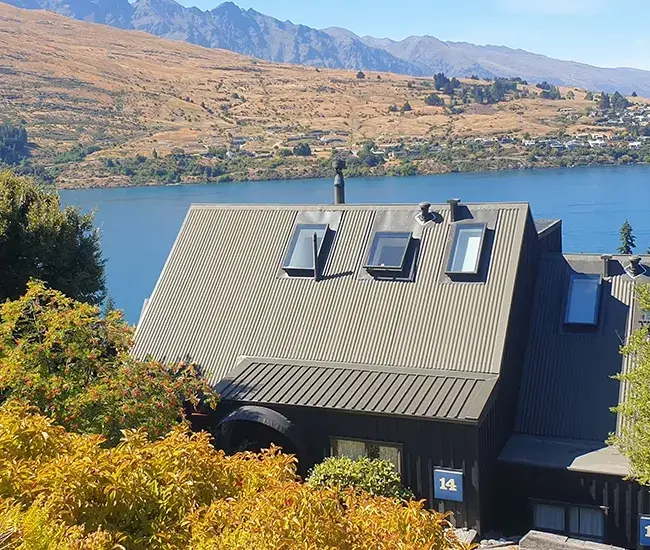

Title Structure
Title Structure at the Ridge Resort
The tiered structure utilised at the Ridge can be summarised as follows:
The Unit Title
This applies to every timeshare and non-timeshare (private) unit and the two Future Development Units . Ownership of a Unit is freehold, meaning the owner holds a fee simple title and forms part of the owner’s Estate until transferred to a third party. Typically, for each timeshare chalet there are 51 unit titles. For each private unit typically, there is one title.
The Timeshare Lease / Weeks
This applies to all the timeshare units only. The fifty-one owners of a Unit have agreed amongst themselves that each owner shall have exclusive use of that unit for one week, Friday to Friday, each year, referred to in the lease as The Timeshare Week. Each owner has been allocated one week per title owned. For each week there is a separate lease. The lessor is all 51 owners and the lessee is the owner allocated that particular week. The leases commenced in 1988 and last for 999 years. The lease is transferred with the title.
The Pooling Deed
This is a legal agreement between some Timeshare Week owners who have elected to pool their Timeshare Weeks together. The participating owners are then able to reserve any available week in any unit within the pool. This provides flexibility with timing, and these are referred to as Floating Weeks.
Owners who have not participated in the Pooling Deed can only use the week, that is the Unit and the Timeshare Week specified in their Title and Timeshare Lease. These are referred to as Fixed Weeks.
Biennial Weeks
Some timeshare weeks were sold as alternate years only. All of the above applies but the lease stipulates Odd or Even years. Biennial weeks might be floating or fixed.
a. Principal Units
- Unit Plan 20743 (UP) lodged with LINZ defines the 32 Principal Units (Unit) and areas of Common Property that together make up the Ridge Resort. The plan specifies the location and boundaries of each Unit in the horizontal plane, as well as its vertical extent, as recorded in the height-limit table on the face of the plan.
- Each unit issued a separately identifiable record of title based on the definition shown on the UP.
- Units numbered 17–27 are classified as Non-Timeshare Units, commonly referred to at The Ridge as Private Units. (The Act refers to these Private Units as “a Principal Unit that is not a timeshare unit”.) These typically have one or only a few owners – usually owned within one family.
- The Units numbered 1-8, 11- 16 and 28-32, are termed Timeshare Units. Each of these have 51 Owners, each of whom are issued their own unique record of title, recording that they each own an undivided 1/51st share of their specific Unit.
- Units 9 and 10 are Future Development Units . Records of title have been issued for this interest even though these units have not been constructed. The owners’ rights and obligations are outlined in the UTA.
b. Common Property
● Areas not part of any unit are common property.
● Common property is collectively owned by all unit owners via Body Corporate. At the Ridge Resort this includes all outside areas and certain indoor areas including the owners lounge and the office. No Right of Title is issued for common property.

Sale Process
Keeping All Ownership Options Open
At the 2025 AGM, owners asked the Committee to investigate whether the Ridge could be sold, and what that might involve.
A sub-committee group chaired by Stephen Tucker (BCC) with members, Christine Toner (BCC), Charlie Grant (OSG) and Anne Sissons (OSG) has undertaken this work. An initial review has now been completed. Here are their conclusions.
Can the Resort be sold?
Not as a single property.
To achieve a full sale, we need a minimum of 75% and more likely close to 90% of all owners to agree.
Given:
Many non-timeshare owners use their units as private homes or holiday home.
Many timeshare owners still want to use the resort
…it is considered extremely unlikely this level of agreement could be reached.
A detailed explanation Here
The more realistic option is to explore an Ownership Restructure.
In simple terms, this means looking at ways to:
Better align the different ownership groups
Give owners more flexibility
Create a fair pathway for those who want to exit
Allow others to continue as they are
This would involve changes to the current structure including subdivision, but no decisions have been made.
Detailed explanation Here
The sub-committee has made a number of recommendations to be considered by the full body corporate at the AGM on June 2nd.


Restructure
Update from the "Sale" Sub-committee
At the AGM, the “Sale” Sub-Committee presented two motions: Motion 15 and Motion 16. The results below are interim, as the formal results have not yet been released.
Motion 15: Restructure investigation
Motion 15 proposed that owners accept the report prepared by the “Sale” Sub-Committee and form a new committee to investigate and report on options to restructure the Ridge. The Chair has advised that the motion passed, with 415 votes in favour and 8 against. A big thank you to everyone who participated and supported the motion, giving us the mandate to continue this work.
Motion 16: Funding proposal
Motion 16 sought approval for up to $50,000 in funding for this work. It was not carried, receiving 99 votes in favour, 320 against, and 3 abstentions. Comments made at the meeting suggest the motion may have failed because of a misunderstanding that the cost would fall solely on private, non-timeshare owners.
Had the motion passed, the cost would have been shared by all owners in proportion to their ownership interests under the Unit Titles Act. In broad terms, this would usually mean about two-thirds of the cost being met by timeshare owners and one-third by non-timeshare owners. The original Sale Committee proposal was a charge of $50 per timeshare week, but the Sub-Committee was advised that this was not lawful. The proposal was therefore changed to a maximum budget of $50,000.
A number of further questions have been raised since the AGM. The responses below are intended to clarify the Sub-Committee’s current thinking and address common concerns.
Q1. Do the motions, particularly Motion 16, suggest that change is imminent?
A. No. At this stage, no physical proposal has been developed. The Sub-Committee’s current view is that the process would involve a two- to three-year planning phase, followed by a further implementation period of around two years if owners ultimately decide to proceed. As a priority, the Committee also intends to consider whether options may be available for owners who wish to exit sooner.
Q2. Why is funding needed at this early stage of planning?
A. Funding was requested so that appropriate professional advice could be obtained before any proposal is developed. This advice would help ensure that any future proposal is legally, practically, and economically achievable. Although Motion 16 was not passed, the Sub-Committee will consider other ways to obtain the advice needed.
Q3. Could non-timeshare, private owners have the land “sold out from under” their units by timeshare owners?
A. No. Any proposal would require at least 75% approval from non-timeshare owners. They are equal partners in any decision affecting the future structure of the property.
Q4. If a developer bought all timeshare units and the office area, would restructuring still be needed?
A. Possibly. If a developer bought all timeshare interests, they would own more than one thousand unit titles. However, the existing Body Corporate structure would remain, including joint ownership of the common property with non-timeshare owners. It is also important to note that the office area is common property.
If a developer intended to redevelop the property, they would still need to cancel the Unit Plan. That would bring the process back to many of the same issues currently being considered.
Q5. Why is a company structure for the timeshare being considered?
A. Some New Zealand timeshares have found that recent changes to the Unit Titles Act, particularly those relating to Body Corporate management, are not well suited to timeshare arrangements. As a result, some have already transitioned to a company structure.
Reported benefits of this approach include:
- easier and less costly transfer of weeks, as shares rather than individual titles;
- the ability to charge the same amount for all weeks;
- no impact on KiwiSaver first-home withdrawal eligibility from owning a week;
- the ability to sell interests to overseas purchasers; and
- increased interest and sales activity reported by at least one timeshare that has made the transition.
No decision has been made. A company structure is only one option that may be explored further as part of the wider restructuring investigation.
Q6. Are timeshare owners’ title protections being placed in the hands of a small number of company directors?
A. This is a valid concern. At this early stage, the Sub-Committee suggests comparing that possible structure with the current position for timeshare owners. Note, this issue applies to timeshare owners only . A Company Structure is unlikely to be suitable for Non Timeshare Owners as more than likely they require a Title for Mortgage Purposes.
For timeshare owners, the practical protection provided by a unit title should be considered in light of the current lack of resale value. Usage rights are already governed by a lease and related agreement, both administered by the Management Company, rather than by the title alone. Similar protections could potentially be incorporated into a company constitution. Directors may also have responsibilities to shareholders that provide protections comparable to, or greater than, those currently available under the Unit Titles Act.

Exchanging
Understanding Timeshare Exchange:
How to get the most out of your week.
For Ridge Resort Owners there are several exchange options available.
What is exchange?
Timeshare exchange organisations enable owners at affiliated resorts to exchange their allocated week for time at another participating resort, subject to availability and exchange value. There are two exchange models:
Weeks – traditional week-for-week exchange.
Points – a points-based system offering more flexible stay options (short stays, split weeks, etc.).
Exchange organisations.
RCI (Resort Condominiums International)
For owners wanting the greatest flexibility in how they use their timeshare, membership of RCI can provide access to a large international exchange network.
7Across
Owners who mainly want to exchange within Australia and New Zealand will find 7Across a cheaper option.
Exchange and Play
This is an exchange scheme operated by Classic with the support of 7Across. It mainly offers other resorts managed by Classic.
How to Join
Eligibility
To join you must:
- Own a timeshare at an affiliated resort.
- Be financial (i.e., levies and fees paid up to date).
Membership Process
- Apply online or by phone – Join via the respective website
- Pay membership fee – RCI have a membership fee which is typically offered in 1, 3, or 5-year terms. 7Across membership is free
- Receive member login details – You will then have access to the booking portal.
- Link your ownership week to your membership. Advise the company you want to link your week including the details, they then contact Classic to confirm the details.
How to Deposit Your Week
Depositing your week means transferring your allocated week to the exchange company. You must be a member of the organisation and you need to inform Classic of your membership number. When you want to deposit contact Classic and ask them to organise this for you.
Step-by-Step Deposit Process
- Your maintenance fees must be fully paid before a week can be exchanged.
- Deposit early---The earlier you deposit (ideally 9–12 months before your week), the stronger your “trading power.” Late deposits generally receive reduced exchange value.
- Receive Notification of Deposit
RCI assigns your deposited week a value (trading power) based on:
- Resort quality and demand
- Unit size
- Season and timing
- How early the week was deposited
- This is converted into Trading Points which are used to exchange
7Across exchanges week by week so you get confirmation of having an available week.
- Contact Classic to deposit your week with 7Across
- Once accepted, your week is banked and available for exchange.